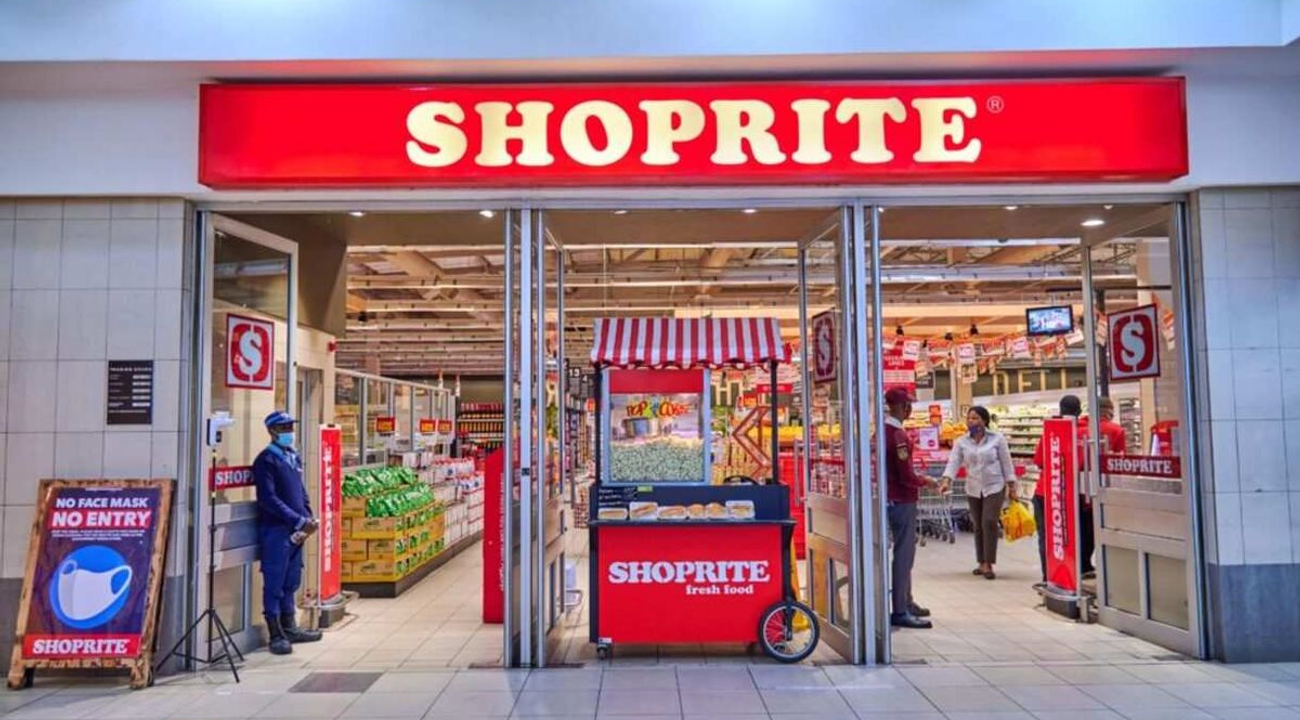
The Day the Lights Went Out in Aisle Seven
Shoprite came to Nigeria with a promise. Twenty-one years later, it left in silence, and the aftermath is still echoing across malls, markets, and millions of lives.
Picture a Saturday afternoon in Lagos, circa 2010. A family loads their trolley with groceries. Children press their noses against the glass of a nearby pastry display. A couple debates whether to grab lunch at the restaurant two doors down. Outside, the car park is chaos. Inside, the air conditioning hums. The lights are bright. Everything feels like it's going to be okay.
That place was Shoprite. And for millions of Nigerians, it wasn't just a supermarket. It was a feeling, an aspiration made physical. A slice of the modern consumer world that the growing Nigerian middle class had been promised and was finally getting to hold.
In March 2026, the last Shoprite store in Nigeria switched off its lights for good.
What happened between that hopeful Saturday and this quiet shutdown is not simply a business story. It is a story about a country, an economy, and the brutal arithmetic of what it actually costs to keep the lights on in every sense of that phrase.
Chapter One: The Promise That Walked Through the Door in 2005
When Shoprite arrived in Nigeria in 2005, it was not entering a market; it was making a statement. The South African retail giant brought something the Nigerian high street had never quite managed to deliver at scale: predictability. Fixed prices. Wide aisles. Reliable stock. The kind of shopping experience where you didn't have to haggle, guess, or shout over a crowd to buy a packet of rice.
It grew fast. Over two decades, Shoprite expanded to more than two dozen outlets across Lagos, Abuja, Port Harcourt, and Kano, embedding itself in the malls that were reshaping how urban Nigerians lived and spent their weekends.
"For many Nigerians, visiting Shoprite became routine. Families bought groceries, children visited nearby cinemas, and restaurants and boutiques thrived on the steady customer flow it brought."
In retail economics, a store that does all that has a name: an anchor tenant. It is the gravitational centre of an entire mall ecosystem, the reason the shoe shop next door has customers, the reason the salon upstairs stays booked, the reason the food court makes sense. Everything orbits around it. And for nearly twenty years, Shoprite was the centre of gravity across Nigerian retail. Then, one by one, the stores began to close.
Chapter Two: When the Naira Started Talking Back
Nobody leaves a market of 200 million people because they feel like it. Shoprite's exit was years in the making, written in the ledgers long before it was written on any storefront.
The first chapter of that ledger is the Naira. Shoprite's model was built, in significant part, on imported goods, which meant it was built on a stable exchange rate. As the Naira depreciated sharply across the 2010s and accelerated into freefall in the 2020s, the cost of stocking those familiar shelves became a different kind of calculation entirely.
According to This Day Live, Naira depreciation drove up the cost of imported goods and packaging materials, squeezing margins that were already thin in a sector where retailers routinely operate on single-digit profit percentages.
The second chapter is inflation. Nigeria's inflation rate surged above 30 per cent in 2024, fueled by food and energy costs. When prices rise that fast, the consumer who once filled a trolley starts filling a basket. Then a bag. Then nothing at all. The middle-class shopper that Shoprite had been built for was still there, but they were shopping differently, spending less, and increasingly asking whether a mall trip was really worth the fuel.
N2.5 trillion was the estimated size of Nigeria's organised mall sector. Shoprite's collapse is projected to have disrupted economic activity worth close to N1.4 trillion within that ecosystem alone. (ThisDay Live)
The third chapter, and perhaps the most quietly devastating, is electricity. Running a large, temperature-controlled supermarket in a country without reliable grid power is not an inconvenience. It is a structural disadvantage. This Day Live reports that unreliable electricity forced malls to depend heavily on diesel generators, dramatically increasing operating costs for every business inside them. For Shoprite, running refrigerators, freezers, lighting, and air conditioning across dozens of locations, those diesel bills were not a line item. They were a liability.
Put it all together: a weakening currency, collapsing consumer purchasing power, and energy costs that never stop climbing, and you have a business case that stops adding up.
Chapter Three: The Shoe Vendor Who Lost Everything but His Shop
Here is where the story stops being about balance sheets and starts being about people.
When Shoprite closed its Ikeja Mall location in Lagos, the store itself went dark. But the consequences spread outward like a crack in a windshield. It was fast, branching, and impossible to contain.
A shoe vendor at the Ikeja Mall told ThisDay that his weekly revenue, which once regularly exceeded N2.5 million, now barely reaches N1 million. He didn't close. He didn't lose his lease. He didn't do anything wrong. He lost the crowd that Shoprite had been delivering to his doorstep for years, and there was nothing he could do about it.
"Some shop owners now operate only a few days a week to cut electricity and staffing costs. Others have downsized or moved their marketing online, searching for customers outside the malls entirely."
This is what economists call the anchor tenant effect in reverse. When the anchor goes, it doesn't just take its own customers. It takes the energy, the footfall, and the commercial logic of the entire building with it.
The same story played out for thousands of workers. Shoprite employed cashiers, warehouse supervisors, cleaners, security staff, and a constellation of contractors around each location. When the closures began, many lost stable formal employment overnight. Some have since moved into the informal economy. The likes of small kiosks and mobile payment stands, while others are still searching in a labour market already stretched beyond its capacity.
And then there are the suppliers. Shoprite was not just a retailer; it was a buyer. A reliable, large-volume, on-schedule buyer for Nigerian farmers, food producers, and packaged goods manufacturers. One food supplier, speaking to ThisDay, put it plainly: Shoprite owed him nothing, no outstanding payments, no broken promises. But the disappearance of his single biggest customer has made sustaining his business nearly impossible.
Chapter Four: What Fills the Silence?
The malls are still standing. The escalators still hum. The fluorescent lights still flicker on in corridors that now feel impossibly wide. And the question that matters most for investors, for retailers, for the future of organised commerce in Nigeria is, what comes next?
ThisDay reports that other supermarket operators are already exploring opportunities to move into vacated spaces across several cities. But they will not be building the same model. The era of the large, import-heavy foreign retailer with a one-size-fits-all playbook may be giving way to something leaner, more local, and, if done right, more durable.
The retailers who will survive in this market will be the ones who have solved the problems that defeated Shoprite: supply chains grounded in local production rather than import dependency; energy strategies that don't leave the business hostage to diesel prices; and a deep, data-driven understanding of what Nigerian consumers can actually afford to buy, and when.
Technology is not optional in that equation. It is the difference between a retailer that sees a problem coming and one that reads about it in a newspaper after the fact. Inventory management, demand forecasting, supplier digitisation, and cost analytics are not luxuries for the Nigerian retail sector. They are survival tools.
"Shoprite's exit is not the story of one retailer's failure. It is a stress test that the entire Nigerian retail sector just failed. Visibly, publicly, and expensively."
The Lesson Written on Every Empty Shelf
Twenty-one years. More than two dozen stores. Millions of trolleys pushed down brightly lit aisles. And then silence.
Shoprite's departure from Nigeria is not a cautionary tale about a company that got it wrong. It is a cautionary tale about a market that makes it extraordinarily hard to get it right, and about what happens to workers, suppliers, and entire communities when a major commercial anchor is pulled from the ground.
The corridors are quiet now. But the question they ask is loud, and it is meant for every business that still operates in Nigeria, or is thinking about doing so:
Have you actually solved the problems that drove the last one out?
If not, the silence will come for you too.
What do you think it will take for the next retailer to survive where Shoprite couldn't? Drop your thoughts in the comments.
Sources:
ThisDay Live — The N2.5 Trillion Silence Shoprite Left Behind
Premium Times — Five Reasons Shoprite Is Leaving Nigeria
African Marketing Confederation — Last Shoprite Stores Close
Nairaland — Shoprite Completes Shutdown